INSURANCE TYPICALLY DOES NOT COVER full-body MRIs for healthy people. But in summer 2025, Shira Kupperman Boehler’s husband suggested she get one as a baseline measure of her overall health, and the couple paid out of pocket for it. An avid runner who considered herself to be in good shape, Boehler never expected the scan would reveal a spot on her right lung that would eventually lead to an early-stage lung cancer diagnosis.
Initially, her doctor told her not to worry, but Boehler had two low-dose CT scans. The results showed the spot was a small mass. A tissue biopsy revealed it was aggressive stage I non-small cell lung cancer. On Oct. 6, 2025, she had surgery to remove the mass and portions of her right lung. The cancer had not spread to nearby lymph nodes, so she required no additional treatment.
Boehler, then 43 and the mother of four children, felt blindsided by the diagnosis. She routinely exercised and had never smoked a cigarette. As she educated herself about lung cancer, she learned that, while it’s true that smoking increases the risk for the disease, 10% to 20% of lung cancers are in never smokers. Additionally, an estimated 5.5% of cases occur in people younger than 55.
The U.S. Preventive Services Task Force (USPSTF) recommends lung cancer screening for certain current or former heavy smokers, who are at higher risk of developing lung cancer than the general population. The USPSTF recommends yearly low-dose CT screening for people 50 to 80 who still smoke or quit less than 15 years ago. The recommendation applies to people who have smoked 20 or more pack-years, which is smoking one pack of cigarettes per day for 20 years or an equivalent amount.
Based on her own experience, Boehler argues lung cancer screening should be made available to more people, especially nonsmoking young women. She acknowledges she could afford to pay out of pocket for her MRI, but others can’t.
She refers to a study published Nov. 20, 2025, in JAMA Network Open, where researchers analyzed health records for 997 people with lung cancer. When looking back to the time of patients’ diagnoses, researchers found only 35% met USPSTF screening criteria. Researchers noted low-dose CT scans for everyone 40 to 85, regardless of smoking history, would have identified 93.9% of the lung cancer cases in the study. The researchers concluded that screening based solely on age and excluding smoking status could improve lung cancer detection.
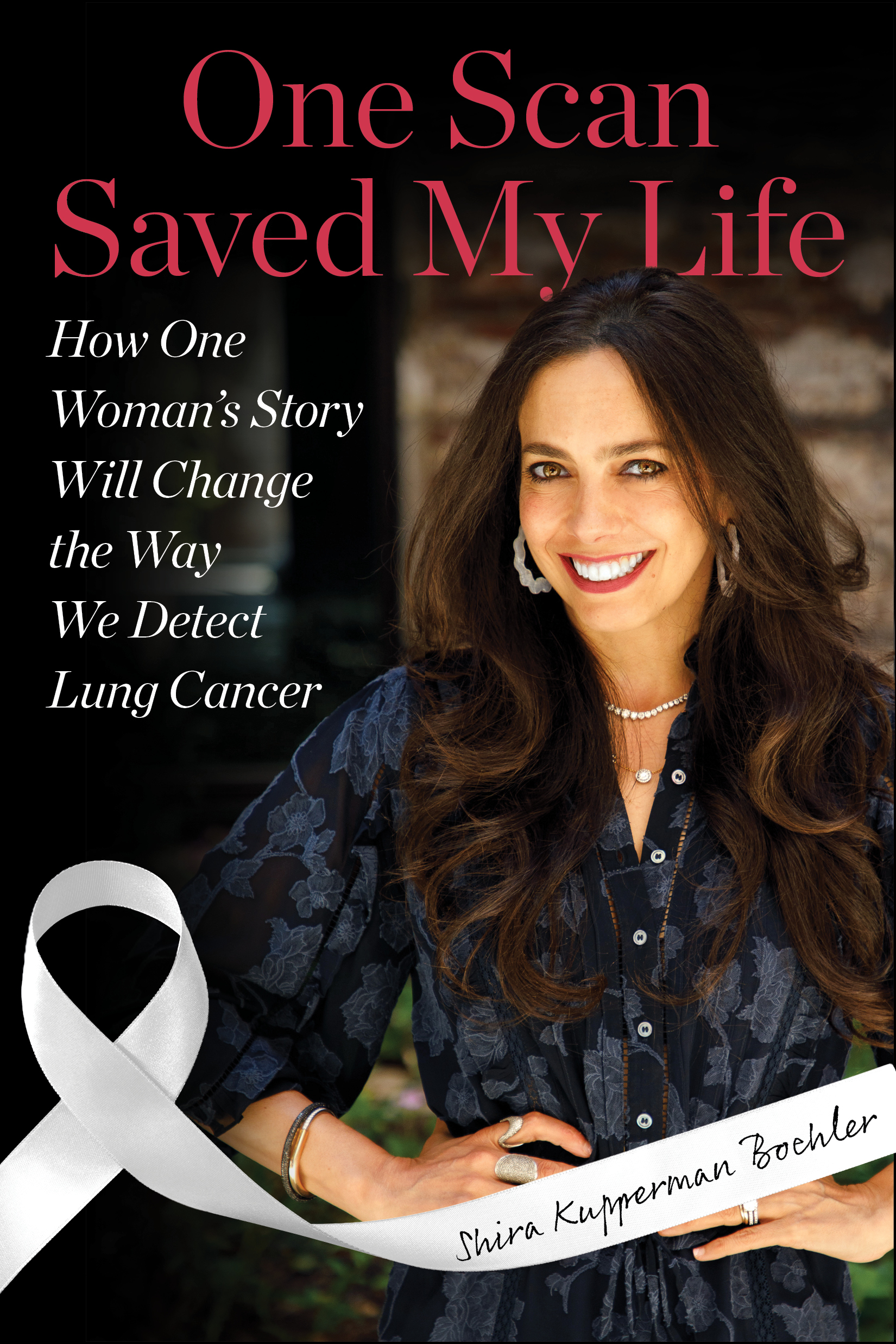
In April 2026, Boehler published One Scan Saved My Life: How One Woman’s Story Will Change the Way We Detect Lung Cancer. The book details her experiences with cancer and her rationale for expanding lung cancer screening to people 40 and older and others who may be at high risk for the disease.
Still, even people eligible based on today’s age and smoking criteria skip low-dose CT scans. In fact, just 18% of U.S. adults who qualify for screening end up getting a scan. “Even if I can get the government to say we need to pay attention to this and the [National Institutes of Health] to fund [more research], even if I can get insurance companies to cover the scans [for more people], … if the public doesn’t know about [lung cancer screening], it won’t happen,” she says.
Boehler spoke with Cancer Today about her efforts to raise awareness about lung cancer and to expand screening to more people.
CT: What motivated you to write this book?
BOEHLER: When I was first diagnosed, I felt so unlucky. As I recovered and learned more about lung cancer, I realized I’m the luckiest girl in the world. My cancer was found when it was stage I and contained in the lungs, and I have a 90% chance of long-term survival. I learned, however, that lung cancer kills more women than breast, ovarian and cervical cancers combined, and not enough people are talking about that.
Last December, I spoke publicly about my lung cancer for the first time to a small group of people at my temple. Two weeks later, one of the rabbis texted me that someone who heard me speak had been motivated to get screened and was diagnosed with stage I lung cancer. That’s when I knew I had to get the message out immediately. I feel I have a window of opportunity to scream about the need for lung cancer screening so that other people can also be diagnosed while their cancer is still stage I. Nearly half of people who are diagnosed with lung cancer receive a stage IV diagnosis, and their chances of long-term survival are very low, but a simple scan can change all that.
CT: What did you learn about lung cancer and screening that surprised you?
BOEHLER: The USPSTF guidelines say that you have to be 50 to 80, be still smoking or have quit within the past 15 years, and have smoked an average of a pack a day for an equivalent of 20 years. However, that doesn’t account for other risk factors. The main message has been smoking increases your chance of lung cancer, but the fact is anyone with lungs can get lung cancer.
I’ve also been shocked at the culture of blame surrounding lung cancer. Essentially every time I told someone about my diagnosis, they assumed I smoked. Some said they didn’t realize I was a smoker. My mom is a breast cancer survivor who was diagnosed 24 years ago, and whenever she told people about her diagnosis, they would ask what meal they could bring or how they could help with the kids. We need to change the perception that lung cancer is somehow a deserved disease.
CT: How would you like lung cancer screening to change?
BOEHLER: I would like to change the screening guidelines to include other risk factors for lung cancer beyond smoking. These include a family history of lung cancer, radon exposure, occupational exposures and potentially exposure to burn pits, which are areas where waste was burned at U.S. military bases during overseas conflicts.
I also think 50 is too late to start screening and would love to see a baseline scan at 40 become the norm. I would love to follow the model of mammography and colonoscopy, where people know they need to go for these tests once they reach a certain age.
A low-dose CT scan takes only a few minutes. You typically don’t take your clothes off, and you lie down in an open tube. It couldn’t be easier. So why is it hard to get the test? A lot of times, the doctors will not order the scan because you’re not a smoker, you don’t have symptoms, and you’re at low risk. But what happened to me isn’t that rare.